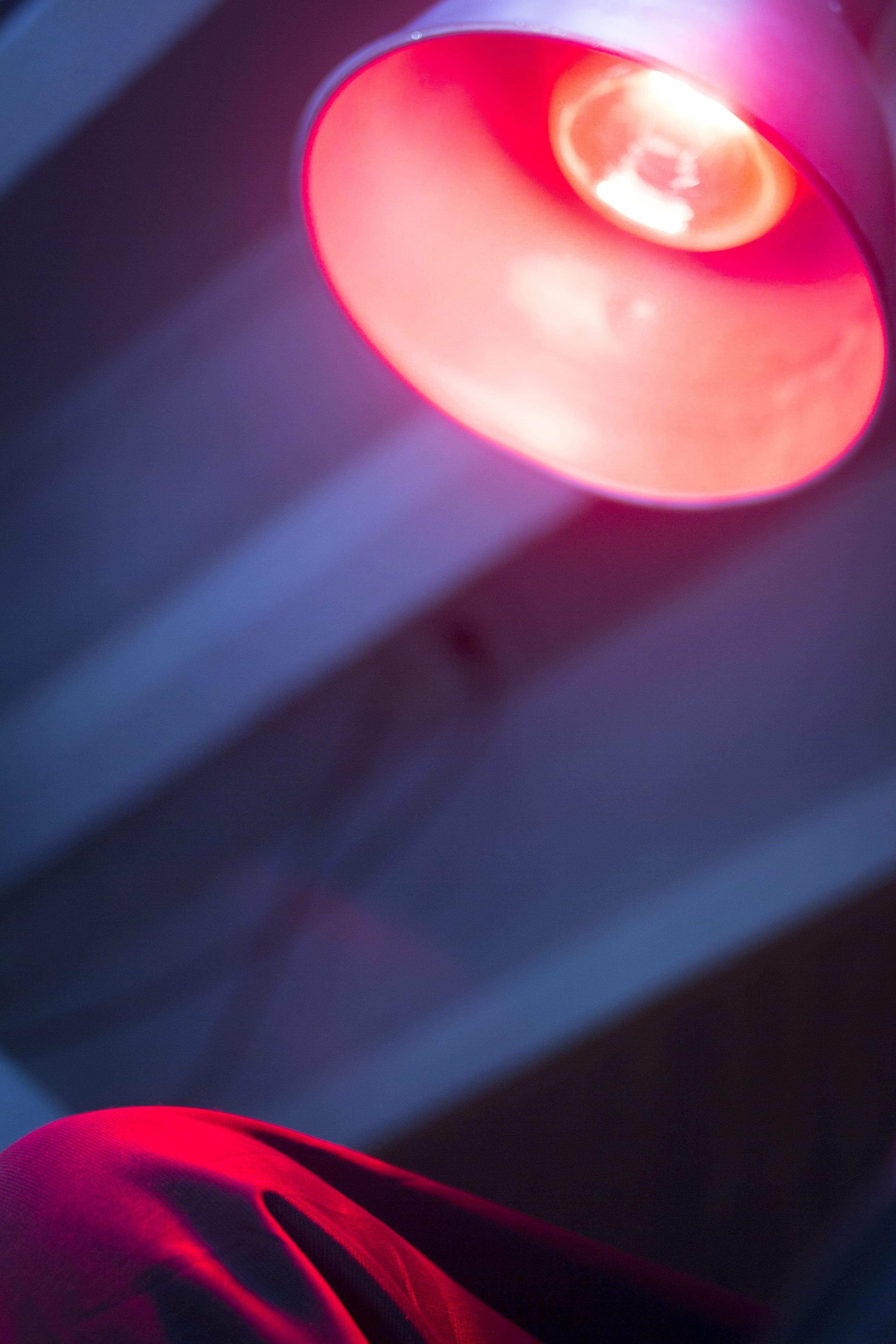
Lie down in a red light therapy bed in Scottsdale and you'll wait for something to happen. Warmth, maybe. A tingle. Some signal that it's working.
You won't feel a thing. And that's exactly right.
Red light therapy, along with near infrared light bed therapy, does its work beneath the surface, at the level of your cells. It interacts directly with your mitochondria, setting off changes that show up later in your skin, your recovery time, your energy, and how rested you feel. No sensation needed.
How Light Bed Therapy Works, In Plain Terms
Your cells run on ATP, produced by tiny structures called mitochondria. Those mitochondria carry a light-sensitive protein — cytochrome c oxidase — that responds to specific wavelengths of red and near infrared light.
When that light reaches them, cytochrome c oxidase activity climbs. ATP production rises. Oxidative stress drops. Cellular repair speeds up. The process has a name: photobiomodulation.
It's measurable, not theoretical. A controlled clinical trial in Photomedicine and Laser Surgery found that people treated with red and near infrared light showed significantly greater intradermal collagen density and smoother skin texture than untreated controls — driven by changes happening inside the cell, not on top of it.
At One Source Vitality, our red light therapy beds deliver full-body coverage across both red and near infrared wavelengths — the same range the research keeps pointing to.
What Light Bed Therapy in Scottsdale AZ Actually Does
Because the mechanism is cellular, the benefits show up across several systems at once.
Skin and collagen. Red light pushes fibroblasts to produce more type I collagen while slowing the enzymes that break it down. A 2025 study in Zoological Research confirmed red light drives skin remodeling through TGFβ and AKT signaling, producing real structural improvement in aging skin. For anyone dealing with sun damage or fine lines, that's the pathway behind the results.
Recovery and inflammation. Near infrared penetrates deeper than red, into muscle, joint, and connective tissue, where it eases inflammation and speeds repair. Less soreness, shorter recovery, more consistent training.
Energy. Better mitochondrial function means more ATP across every cell the light reaches. Regular users often describe steadier daytime energy — not a stimulant jolt, but a real shift in how cells make fuel.
Mood and sleep. Evening red light supports natural melatonin rhythms and serotonin pathways, which can mean easier sleep onset and more restorative rest.
Pair red light with hyperbaric oxygen therapy, and you're feeding cellular energy production from two directions at once — a combination plenty of our Scottsdale patients run on purpose.
Red Light vs. Near Infrared: The Difference That Matters
They're related, but not identical, and the distinction is worth knowing.
Red light (about 630–660nm) works at the skin's surface and shallow dermal layers: ideal for collagen, skin tone, and wound healing.
Near infrared light (810–850nm) goes deeper, into muscle, tendon, and joint, making it the wavelength of choice for pain, deep inflammation, and post-training recovery.
A full-spectrum light bed delivers both at once, which is why the full-body bed format outperforms small handheld panels: coverage and depth both count. For patients who also use HOCATT ozone steam sauna therapy, which carries its own infrared component, a dedicated light bed adds a deeper, more focused layer of photobiomodulation.
Frequently Asked Questions
Q: How many sessions before I see results?
Most people notice shifts in skin tone, energy, and recovery within two to four weeks. Deeper collagen remodeling usually shows around six to eight weeks. Sessions run 20 minutes with zero downtime.
Q: Is near infrared light bed therapy safe for every skin type?
Yes. Unlike UV, red and near infrared wavelengths don't damage DNA or cause sun-type breakdown. They're safe across all skin tones. Our team confirms it's right for you before your first session.
Q: Can I combine it with other treatments here?
Definitely — we encourage it. Light therapy pairs especially well with IV vitamin drips, PEMF, and hyperbaric oxygen. Well-nourished, well-oxygenated cells give photobiomodulation more to work with.
Your Cells Already Know What to Do With Light
Photobiomodulation isn't new — sunlight has driven cellular repair since life began. A light bed simply isolates the wavelengths that do the good work and leaves out the UV that does the damage.
At One Source Vitality in North Scottsdale, our beds are full-spectrum, full-body, and clinically dialed in. Better skin, faster recovery, steadier energy: light bed therapy in Scottsdale AZ is one of the most evidence-backed, zero-downtime tools you've got.